
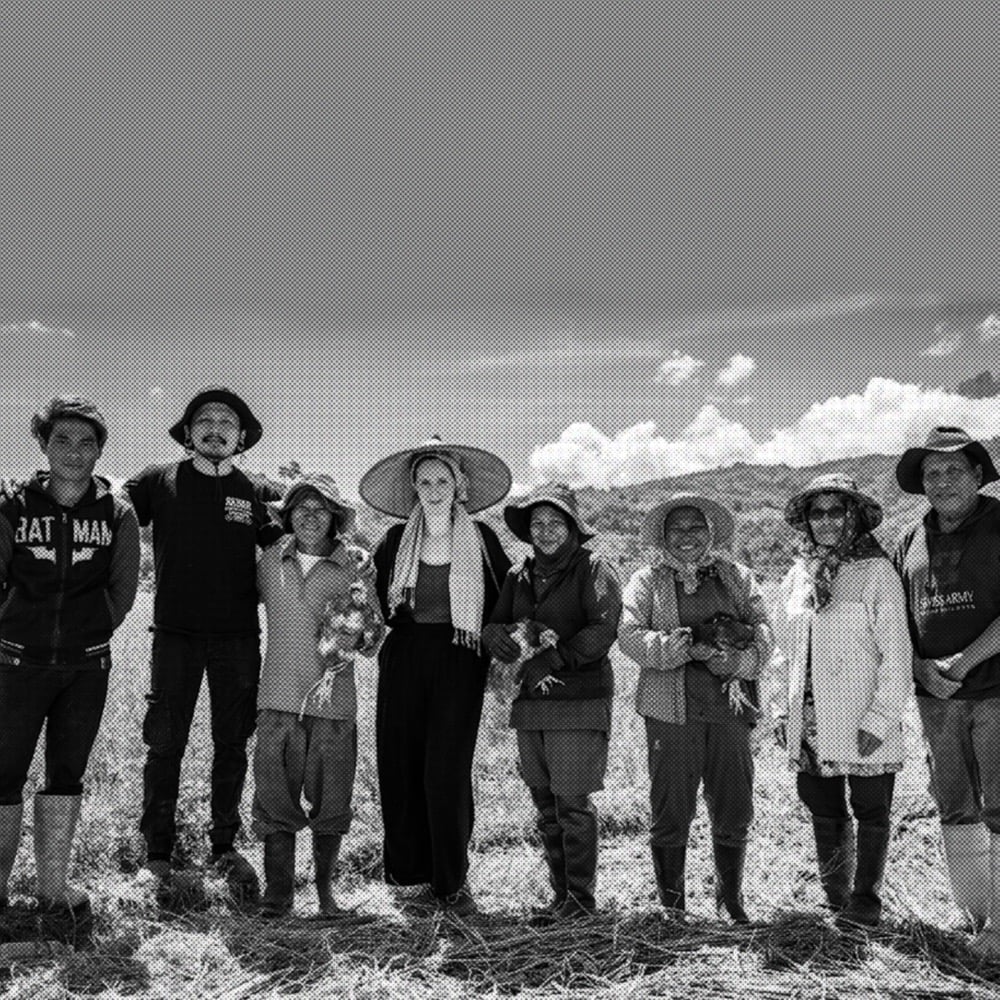
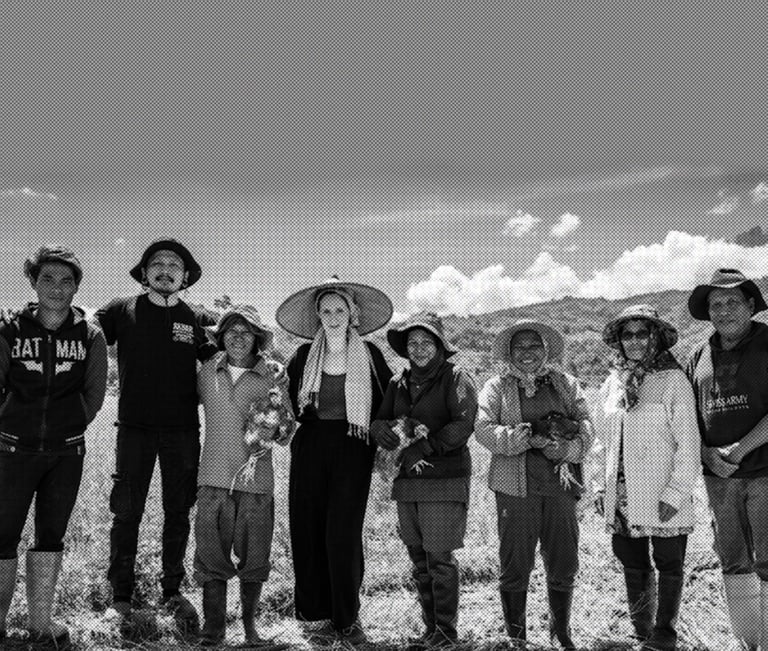
Catriona Maddocks & Gindung MC Feddy Simon
Catriona Maddocks and Gindung Mc Feddy have been collaborating as an artist duo for seven years. Catriona is an artist, researcher and curator originally from the UK. Gindung Mc Feddy Simon is an artist, musician and cultural revivalist from Ranau, Sabah. Together they have carried out reseach across Sarawak, Sabah and Kalimantan, in search of indigenous instruments, with specific focus on the Bornean boat lute. Additionally they have worked with international museums including Pitt Rivers Museum, Oxford and the British Museum, to review archives and recentre community voices within the museum databases.
They have been planting padi on Gindung's ancestral land for the past four years, and have exhibited the work and documentation in Sabah, Sarawak, Brunei, Central Kalimantan and Kuala Lumper.
Title : Jamin?
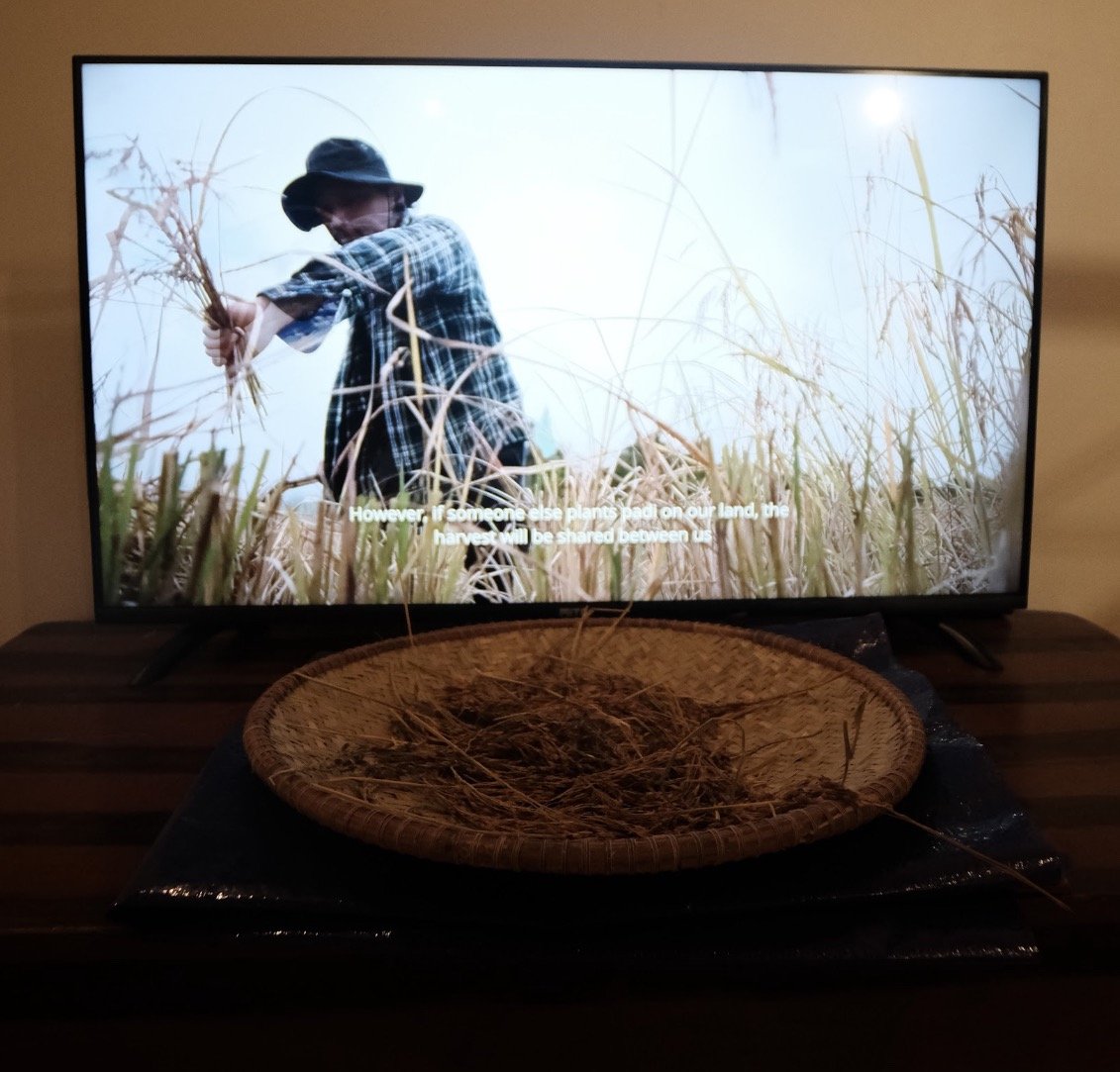
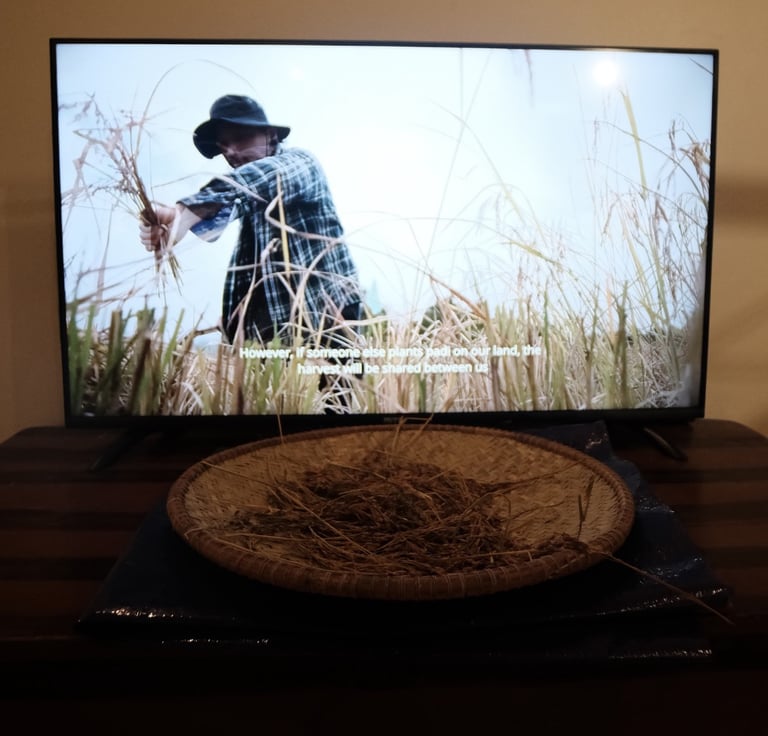
Medium : Video installation, winnowing tray, rice grain
Year : 2022-2025
Pagar & Padi is a land art project created by planting rice in the shape of the word “JAMIN” (guarantee) on ancestral land in Ranau, Sabah. Developed over four years in collaboration with local communities, the work responds to the promises made to the Indigenous peoples of Sabah during the formation of Malaysia in 1963. These included guarantees around land autonomy, freedom of religion and rights to continue the practice of adat (customary practices)
The project draws from traditional rice farming methods and involves communal labour, highlighting the role of collective work and local knowledge in managing land sustainably. Over its lifespan, JAMIN has also become an evolving record of transformation— chronicling the construction of new roads and its impact of land use, and the increasingly erratic weather patterns brought on by climate change. As yields fluctuate, landscapes shift, and community members focus on other economic activities, the work asks: what has been guaranteed, and at what cost?
By using the land itself, JAMIN functions as both a visual statement and a long-term documentation of change, prompting reflection on the relationship between policy, environment, and the everyday realities of rural communities.